
Views: 0 Author: Site Editor Publish Time: 2026-07-21 Origin: Site


Chinese noodles serve as a daily, sustaining staple in many Asian cultures. These populations eat refined wheat and rice noodles daily without experiencing widespread obesity. Western diet culture frequently categorizes these same foods as fattening. This creates a dietary paradox. The difference lies in lifestyle, portion control, and meal architecture rather than the carbohydrate source itself.
Consumers struggle to balance weight management goals with the desire to eat culturally significant foods. Many lack the nutritional literacy to differentiate between a healthy noodle dish and a highly caloric, ultra-processed one. We must move beyond the binary good versus bad food debate. By evaluating base ingredients, processing methods, macronutrient profiles, and meal assembly, you can make evidence-based dietary decisions. You can enjoy traditional meals while maintaining metabolic health.
Table of Contents
Context Over Carbohydrates: Chinese noodles are not inherently fattening; weight gain is primarily driven by caloric surplus, often resulting from high-fat sauces, deep-frying, and oversized portions rather than the noodles themselves.
Processing Matters: There is a critical nutritional distinction between air-dried or fresh traditional noodles and ultra-processed, flash-fried instant noodles.
Ingredient Diversity: The market offers multiple functional solutions, from high-carb wheat and rice noodles for energy to near-zero-calorie konjac (shirataki) noodles for strict caloric deficits.
The Assembly Framework: A healthy noodle dish requires treating the noodles as a carbohydrate base alongside high-volume vegetables and lean proteins to lower the overall glycemic load and increase satiety.
To determine what makes a carbohydrate source viable for weight management, we evaluate its impact on satiety, micronutrient density, and glycemic index. Not all Noodles are created equal. The base ingredient fundamentally alters how your body digests and metabolizes the meal.
Traditional wheat and egg noodles form the backbone of dishes like Lo Mein and Chow Mein. Manufacturers make them from refined wheat flour, water, and sometimes eggs. The refining process strips away the bran and germ. This leaves the starchy endosperm. The resulting product digests quickly. Eating it in isolation causes rapid spikes in blood sugar and insulin. Adding egg increases the protein and fat content slightly. This addition helps slow digestion compared to plain wheat varieties.
Alternative flours provide distinct advantages for those seeking higher micronutrient density. Buckwheat soba noodles offer a lower glycemic index and a robust amino acid profile. Millet-based noodles and whole-wheat Lanzhou lamian retain the bran and germ. This retention significantly increases dietary fiber. The retained fiber slows gastric emptying. You stay fuller for longer, and your post-meal blood glucose levels stabilize.
Rice noodles, such as Ho Fun and Vermicelli, dominate Southern China and Southeast Asia. Made from rice flour and water, they are naturally gluten-free. They suit individuals with celiac disease or gluten sensitivities perfectly. Traditional white rice noodles contain minimal fiber and protein. They digest rapidly. You must pair them with fats and proteins to prevent quick returns of hunger.
Manufacturers extrude glass or cellophane noodles from mung bean, sweet potato, or tapioca starch. People often think their transparent, light appearance means they have low caloric density. This is false. Starch-based noodles are highly concentrated carbohydrates. They are gluten-free and offer a unique chewy texture. However, they provide almost no protein or fiber. They carry a caloric load similar to standard wheat pasta.
Asian noodles and Western pasta differ heavily in ingredients, preparation, and water absorption. Western pasta relies on hard durum wheat semolina. Extruding it through brass or Teflon dies creates a dense structure that holds up to heavy boiling. Asian noodles utilize softer wheat varieties and higher hydration levels during dough mixing. Cooks frequently pull, stretch, or cut them fresh. Asian noodles absorb more water and usually sit in broths. The actual volume of carbohydrates per bowl is lower than a dense plate of Italian pasta.
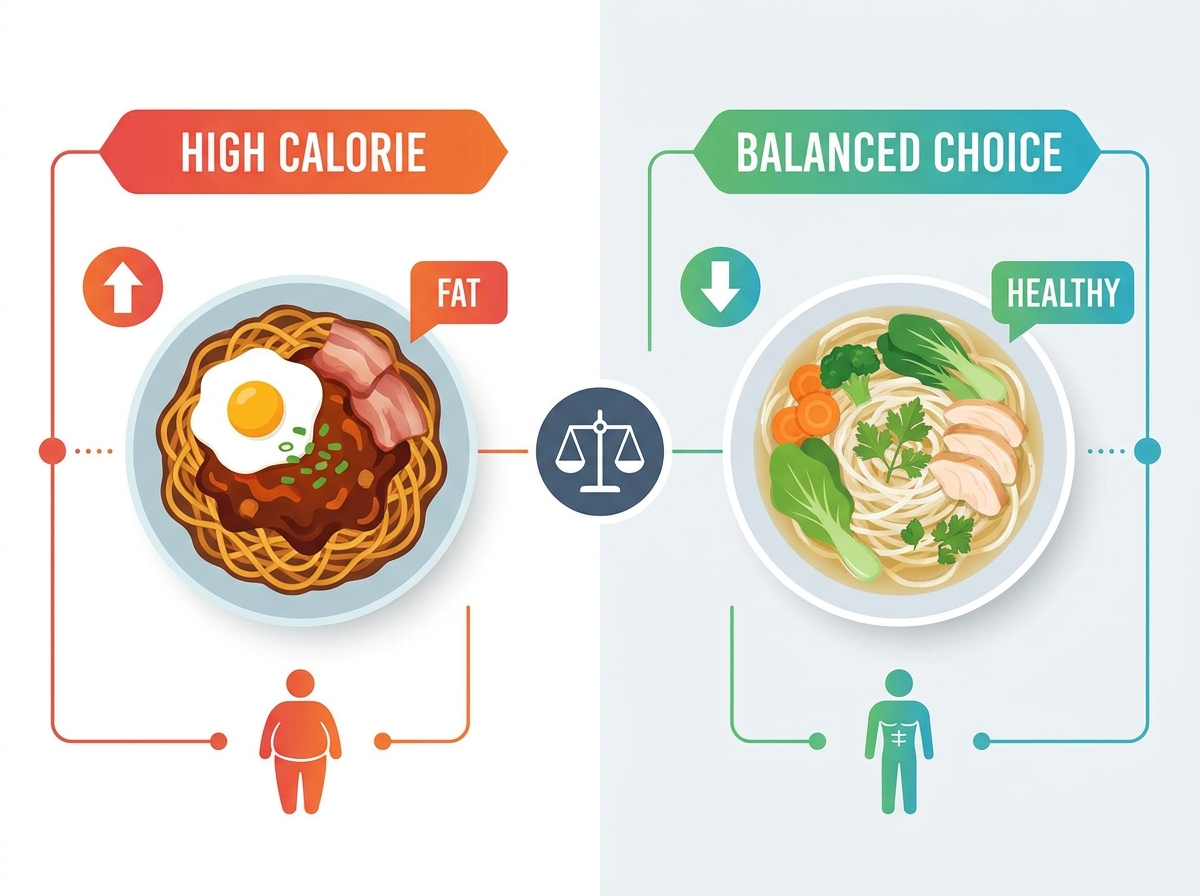
Understanding the specific caloric and macronutrient profiles of different varieties is mandatory for accurate meal planning. You cannot manage what you do not measure. The following metrics represent a standard 100g cooked serving. This provides a baseline for comparison.
Noodle Type (100g Cooked) | Calories (kcal) | Carbohydrates (g) | Protein (g) | Fat (g) |
|---|---|---|---|---|
Fresh Egg Noodles | 140 - 150 | 28 | 5 | 1.5 |
Rice Vermicelli | 110 - 130 | 24 | 2 | 0.5 |
Udon Noodles | 100 - 110 | 21 | 3 | 0.5 |
Glass Noodles (Mung Bean) | 120 - 140 | 30 | 0.1 | 0.1 |
Instant Noodles (Fried, Dry Block) | 380 - 450+ | 55+ | 8 | 15+ |
Fresh egg noodles contain a high percentage of water directly from the package. A 100g serving is physically larger but less calorically dense than 100g of dried noodles. Dried wheat noodles have their moisture removed for shelf stability. They rehydrate when cooked. Measuring them dry versus cooked leads to massive portion miscalculations. Always weigh dried noodles before cooking to maintain accurate caloric tracking.
The nutritional profile of standard instant ramen presents severe metabolic challenges. A typical small serving contains approximately 188 kcal, 27g of carbohydrates, 7g of total fat, 3g of saturated fat, and less than 1g of fiber. The manufacturing process causes the issue. Commercial instant noodles are flash-fried in palm oil. This removes moisture quickly and extends shelf life. The process injects saturated fat directly into the carbohydrate matrix. The accompanying seasoning packets are loaded with sodium and chemical preservatives. This contributes to water retention and elevated blood pressure.
Konjac or shirataki noodles serve as a specialized functional tool for severe caloric restriction. Derived from the root of the konjac plant, these noodles consist almost entirely of water and glucomannan. Glucomannan is a highly viscous, soluble dietary fiber. They contain near-zero calories and zero net carbohydrates. Glucomannan absorbs water in the digestive tract. This promotes significant satiety. They offer no metabolic energy or micronutrients. Excessive consumption causes digestive discomfort.
Evaluating the health impact of a meal requires looking at the complete dish architecture. The noodle is just the vehicle. The accompaniments and cooking methods dictate the final caloric load.
Sauces act as the primary vector for hidden calories in Asian cuisine. Peanut sauces, chili oils, sesame oil, and sugar-laden soy glazes easily double or triple the caloric footprint of a meal. One tablespoon of sesame or chili oil adds roughly 120 calories of pure fat. Sweet soy sauces and hoisin add concentrated simple sugars. Tossing noodles in these dense mixtures skyrockets the caloric density without increasing physical food volume.
The preparation method drastically alters the satiety index of the meal. Eating noodles in a clear, nutrient-rich bone broth promotes volume-based satiety. The liquid stretches the stomach receptors. This signals fullness to the brain while adding virtually zero calories. Dry or pan-fried noodles require significant amounts of cooking oil to prevent sticking. Stir-fried dishes are inherently more calorically dense and less hydrating than soup-based counterparts.
Restaurant serving sizes rarely align with clinically recommended carbohydrate portions. A standard recommended portion of cooked carbohydrates is 1/2 to 1 cup. A restaurant takeout container of Chow Mein contains three to four cups of densely packed, oil-coated noodles. This portion distortion leads to unintentional caloric surpluses. It drives weight gain over time.
Eating naked carbohydrates causes rapid digestion. Consuming noodles without sufficient fiber, fat, or protein spikes blood sugar levels. Your body prompts a sharp insulin release to clear the glucose from the bloodstream. The subsequent drop in blood sugar triggers rapid hunger and lethargy. Pairing noodles with healthy fats and lean proteins slows gastric emptying. This blunts the glycemic response and provides sustained energy.
Consumers frequently fail when trying to integrate noodles into a weight-loss or maintenance diet. Poor execution and lack of ingredient transparency ruin dietary adherence.
Takeout dishes like Pad Thai, Drunken Noodles, and Chow Mein suffer from a severe lack of transparency. Restaurants prioritize flavor and texture over nutritional balance. They utilize heavy pours of cooking oil, palm sugar, and high-sodium broths. Relying on restaurant preparations makes accurate macro-tracking impossible. It drastically increases the risk of unexpected caloric surpluses.
Failing to read the processing method on packaged noodles is a critical error. Dried noodles dehydrated via air circulation retain a clean macronutrient profile. They consist almost entirely of carbohydrates and a small amount of protein. Noodles flash-fried in palm oil carry hidden saturated fats. Always check the ingredient list for added oils. If palm oil or vegetable oil sits near the top of the list, the manufacturer fried the product.
Implement the 2:1 ratio rule to mitigate caloric density while maintaining meal satisfaction. Mandate a structure of two parts non-starchy vegetables to one part noodles. Bok choy, gai lan, bean sprouts, bell peppers, and snap peas add massive physical volume. They provide crunch and micronutrients to the bowl. This strategy allows you to eat a physically large meal that triggers mechanical satiety without proportional calorie increases.
Sustainable weight management requires shifting away from dietary guilt and restriction. Focus on strategic addition. Add fiber, water, and protein rather than completely subtracting carbohydrates.
Constructing a meal that aligns with specific dietary goals requires intentional choices. You must select the right base, the cooking method, and the protein source. The assembly process remains systematic whether you track macros, maintain a caloric deficit, or fuel athletic performance.
High-Energy/Active: Whole wheat, buckwheat soba, or traditional fresh wheat noodles provide sustained energy for high daily activity levels.
Gluten-Free/Moderate: Brown rice noodles or traditional rice vermicelli offer clean carbohydrates for those managing gluten sensitivities.
Aggressive Deficit: Shirataki konjac noodles, kelp noodles, or zucchini spirals mixed with a small portion of glass noodles allow for maximum volume with minimal calories.
Stir-frying involves high oil absorption. The porous surface of the noodles acts like a sponge for cooking fats. Prioritize boiling, steaming, or poaching the noodles directly in a seasoned broth to optimize caloric retention. These methods utilize water as the cooking medium. They add zero calories while maximizing hydration.
A carbohydrate base must be anchored by a robust protein source. Integrating lean chicken breast, silken or firm tofu, sliced beef flank, shrimp, or edamame is non-negotiable for metabolic stability. Protein requires more energy to digest due to the thermic effect of food. It slows the overall digestion rate of the meal. It lowers the glycemic index and drastically improves the satiety index.
Selecting healthier instant noodles requires evaluating the ingredients, processing method, serving size, and nutritional profile. By choosing air-dried or high-protein products, reducing seasoning oils, and pairing noodles with lean protein and vegetables, consumers can enjoy greater convenience while maintaining balanced nutrition.
SINOMIE specializes in manufacturing high-quality instant noodles and customized noodle solutions for global food brands, distributors, retailers, and food service businesses. Backed by advanced production facilities, strict quality control, and extensive export experience, the company helps customers deliver safe, authentic, and innovative noodle products that meet changing market demands.
Audit your pantry immediately and throw away all flash-fried instant noodle packets.
Purchase a digital kitchen scale to weigh all dried pasta portions before cooking.
Build your next meal using the strict 2:1 non-starchy vegetable to noodle ratio.
Replace heavy, oil-based stir-fry sauces with clear, nutrient-dense bone broths.
A: The difference is minimal. Both have similar caloric densities, roughly 110 to 130 kcal per 100g cooked. Rice noodles are gluten-free but lower in fiber and protein than whole-wheat options. Weight loss depends entirely on portion control and the proteins and vegetables you pair them with.
A: A baseline 100g serving of plain cooked noodles contains about 130 calories. A typical restaurant stir-fry easily exceeds 800 to 1000 calories due to massive portions and heavy cooking oil. A home-cooked, broth-based noodle soup with lean protein and vegetables ranges from 350 to 500 calories.
A: Commercial instant noodles are flash-fried in palm oil. This loads them with saturated fat. They consist of refined carbohydrates stripped of fiber and micronutrients. The flavor packets contain excessive sodium and chemical preservatives. This combination leads to water retention, elevated blood pressure, and rapid caloric surplus.
A: The cultural context involves smaller actual noodle portions paired with high volumes of vegetables and lean proteins. Preparations are frequently broth-based rather than oil-heavy. Traditional Asian lifestyles incorporate higher daily step counts and active transportation. This balances the daily caloric intake effectively.
A: Asian noodles are often served in light, hydrating broths with abundant vegetables. This naturally reduces caloric density. Western pasta dishes frequently rely on calorie-dense, dairy-heavy, or meat-heavy sauces like Alfredo. They feature much larger pasta-to-vegetable ratios, making them significantly easier to overeat.
A: Yes. Weight loss is governed by Calories In, Calories Out. As long as your daily noodle consumption fits within your overall caloric and macronutrient targets, you will lose weight. You must prepare them mindfully with high-volume vegetables and lean proteins to maintain satiety.
A: Shirataki konjac noodles and kelp noodles are the lowest in calories. Made primarily of water and indigestible fiber, they contain near-zero calories and zero net carbohydrates. They are excellent tools for adding physical volume to a meal during a strict caloric deficit.


)
)